
What a Sewer Scope Can Reveal Before You Make a Decision
A sewer scope report can look more serious than it is, or much less serious than it is. If you are keeping a transaction moving, you need more than a video and a note that says “roots observed.”
A sewer scope inspection in Portland shows the visible condition inside the private sewer lateral on the day of the inspection. It does not automatically tell you how urgent a defect is, where the pipe sits underground, or what the right repair should cost.
At Black Rock Underground, we look at the footage, defect location, pipe material, and amount of blockage before recommending the next step. The goal is to turn a vague finding into something the parties can use.
What to know
A sewer scope is an add-on, not part of a standard home inspection.
It can show roots, offset joints, standing water, cracks, and collapsed pipe.
The camera sees inside the line. A locate shows where the camera is and estimates its depth.
Get the complete video, written findings, and locate information before discussing a repair credit.
What is a sewer scope inspection in Portland?
A sewer scope is a recorded camera inspection of the private sewer lateral, the pipe carrying wastewater from the building toward the public sewer. The camera usually enters through an accessible cleanout.
The inspection is separate from a standard home inspection. InterNACHI describes sewer scoping as an additional or ancillary service, not a required part of its Home Inspection Standards of Practice.
The BRU guide places a typical Portland scope at about $150 to $250 in 2026. The City gives a broader range of $100 to $300 for a scope and locate. Access, line length, and locating affect the price.
We commonly recommend scoping pre-1985 homes and properties on older, tree-lined streets. Newer lines can still have installation defects, settlement, debris, or damaged connections.
What happens during a sewer camera inspection?
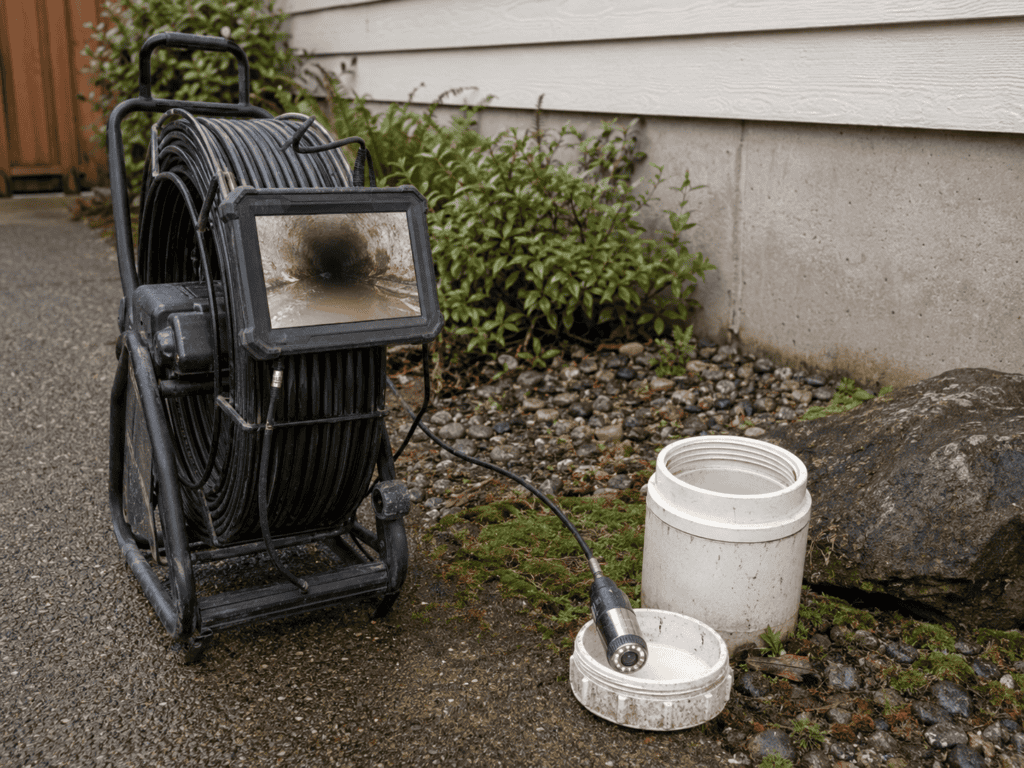
The technician first identifies an access point. An exterior cleanout is usually simplest, though some properties require another approved opening.
Water may be run before the camera enters the line. The camera head is then pushed through the lateral while the technician watches the live image and records the trip. A footage counter helps show how far the camera has traveled, but that distance alone does not map the defect on the ground.
A careful technician slows down at material changes, joints, standing water, roots, and damaged areas. The return trip can provide a clearer second view.
Roots, a blockage, an offset, a collapse, or poor access may stop the camera. The report should say how far it went, why it stopped, and what was not seen.
What does a sewer scope show?
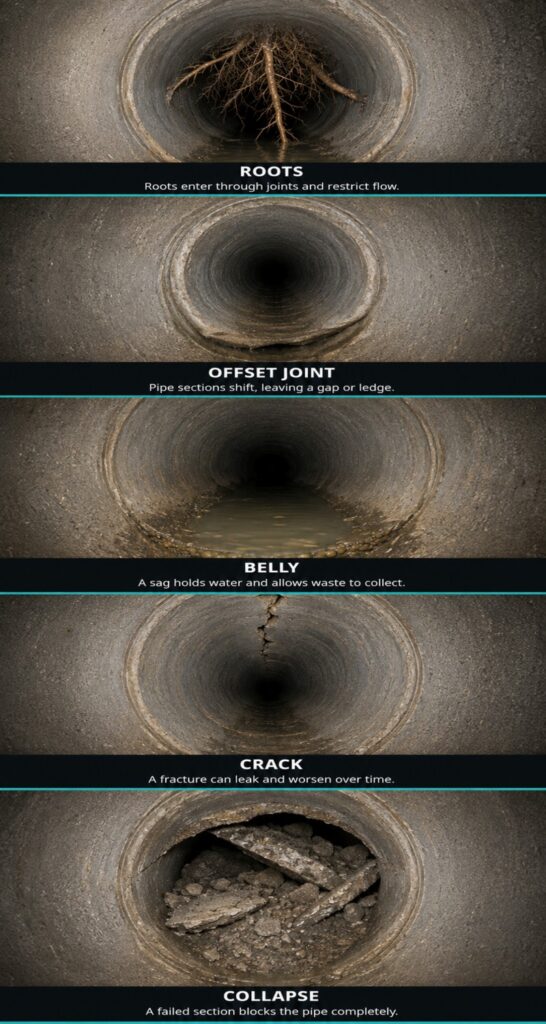
The scope shows visible conditions inside the pipe. Five findings come up often, and each needs context before anyone jumps from “defect” to “replacement.”
Root intrusion
Roots usually enter through a leaking or separated joint. Fine roots may call for cleaning and monitoring. Dense roots that block flow or return quickly point to a defect cleaning alone will not correct.
Offset joints
An offset joint means two pipe sections no longer align. A small offset may remain serviceable. A larger one can catch waste, restrict the camera, or admit roots and soil.
Bellies and standing water
A belly is a low section where water collects. The camera shows standing water, but not the pipe’s grade or whether settlement will continue. The water depth, affected length, and backup history all matter.
Cracks and broken pipe
A crack can range from a surface defect to a structural break. Missing pieces, incoming soil, and loss of shape make repair more likely.
Full or partial collapse
A partial collapse reduces the opening. A full collapse may stop the camera, leaving the pipe beyond it unseen. The location must be confirmed before defining the repair.
NASSCO’s assessment programs give inspectors a common way to classify visible defects and severity. A residential report may be less formal, but it should say more than “failed.”
What can a sewer scope not tell you?
A scope is a visual inspection, not a complete underground diagnosis. InterNACHI’s standards say it is not technically exhaustive, does not identify concealed defects, and cannot predict future conditions.
The camera alone cannot reliably tell you:
The exact surface location or depth of a defect without locating equipment
The condition of soil and pipe bedding outside the line
Whether a belly will stay the same or continue to settle
What lies beyond a blockage or collapsed section the camera cannot pass
Whether every joint is watertight when no opening is visible
The full condition of a public sewer section the camera did not inspect
The right repair method without considering access, grade, utilities, and the route
The footage is evidence, but only one part of the decision. Our guide to why older Portland homes are reaching sewer trouble now explains how age, joints, roots, and movement fit together.
Why does the sewer locate matter as much as the camera?
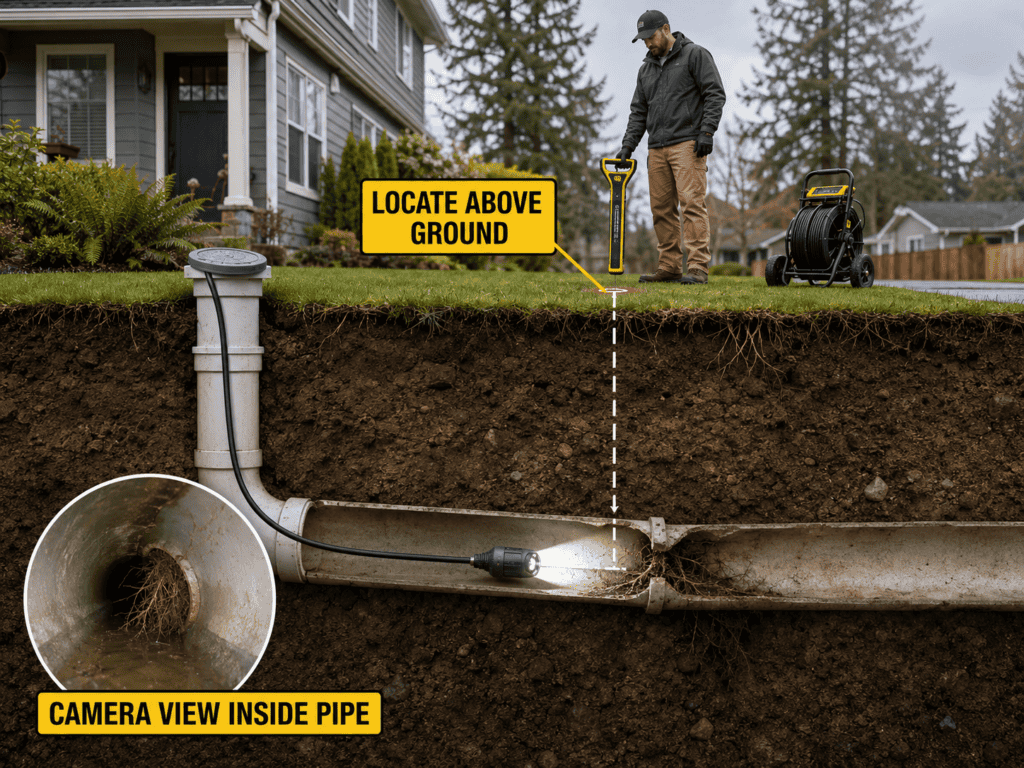
The camera tells you what the defect looks like. A locate tells you where it is.
Many cameras contain a transmitter called a sonde. A receiver above ground finds its signal so the technician can mark the estimated position and depth.
Location can change the repair plan. A bad joint beneath open lawn is a different project from the same defect beneath a driveway or another utility.
The City says owners should receive the video, findings, a map or drawing, and a condition assessment.
How do you read a sewer scope report?
Start by separating the finding from the recommendation. “Roots at 42 feet” is an observation. “Replace the sewer” is a proposed response. The report should explain what connects the two.
Words such as minor, moderate, and severe only help if defined. Look for how much of the opening is blocked, whether the camera passed, whether water moves, and where the defect sits.
“Monitor” usually means the pipe remains functional but should be checked later. “Repair” means a condition affects flow, structure, or reliability enough that observation is unlikely to settle it.
If major work is recommended, get the footage reviewed and collect more than one bid. The City recommends at least three. The scope company should provide enough documentation for another contractor to price the same conditions.
Our real estate agent support is built around short timelines. We inspect before quoting and provide a fixed lump sum bid based on what we verify.
What should good sewer-scope documentation include?
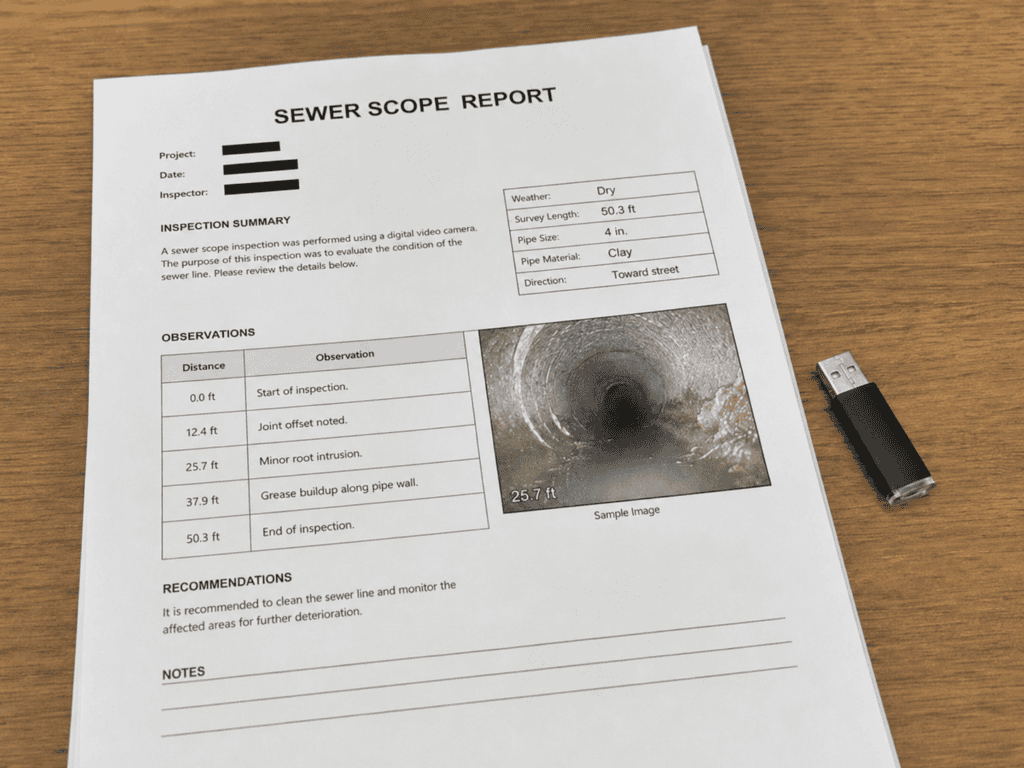
Good documentation lets everyone discuss the same defect. It should include:
- Property address and inspection date
- The access point used
- The visible pipe materials and transitions
- Continuous video with adequate lighting
- A footage counter and clear narration
- Pauses at each material finding
- The point where the camera stopped and why
- Surface markings or a defect map
- A written summary that separates observations from recommendations
- A copy of the complete footage
We give clients their footage on a USB drive, so every party and contractor can review the same record.
A sewer line replacement evaluation should explain why the proposed method fits the property, not just repeat that the scope “failed.”
Sewer scope inspection FAQ
How much does a sewer scope cost in Portland?
The BRU guide places a typical sewer scope around $150 to $250 in 2026. The City of Portland publishes a broader range of $100 to $300 for a scope and locate. Ask whether the quoted price includes locating, a written report, surface markings, and a copy of the complete video.
Is a sewer scope part of a home inspection?
No. A sewer scope is generally an add-on to a standard home inspection. It uses a separate camera to inspect the private sewer lateral from an accessible entry point toward the public connection. Confirm who will perform it, how far the camera should travel, and what documentation you will receive.
How long does a sewer scope take?
Many residential scopes can be completed within an inspection appointment, but there is no reliable time for every property. Access, line length, bends, roots, blockages, and locating work all affect the visit. The better question is whether the technician inspected the full accessible line and documented anything that stopped the camera.
Should I get a sewer scope on a newer home?
A newer home has a lower chance of age-related pipe failure, but age does not rule out poor installation, settlement, construction debris, or damaged connections. Consider the property history, nearby trees, drainage symptoms, and whether the sewer was ever documented. A scope can establish a useful baseline even when no defect is found.
What happens if the sewer scope finds a problem?
First, get the video, written findings, and defect location. Then determine whether the condition calls for cleaning, monitoring, a spot repair, or replacement. If major work is recommended, have contractors’ price the same documented condition. That gives the parties a real number to use during the inspection contingency.
Turn the sewer video into a clear answer
If a scope report has raised questions during a transaction, we can review the footage, confirm what is visible, and explain what the next step should be. We provide a free evaluation without pressure. Call (503) 747-9312 or request a free estimate.