How to Recognize Sewer Trouble Before It Becomes a Bigger Problem
The washing machine starts draining, and the downstairs toilet bubbles. A shower takes longer to empty than it used to. You had the line cleared a few months ago, but that familiar slow drain is back.
Do those problems mean your sewer needs replacing? Not necessarily. But they deserve more attention than another round of hoping the clog goes away.
Your home’s sewer line carries wastewater from sinks, showers, toilets, and appliances toward the public sewer. When that shared path develops a problem, the clues can show up in different rooms, or outside in the yard.
For Portland homeowners, the useful question is what the pattern tells you and how quickly you should act. Here are seven signs worth recognizing, including three that mean it’s time to call today.
What to know
One slow drain can be a local clog. Problems across several fixtures deserve a closer look.
Recurring blockages warrant investigation, even when cleaning temporarily restores flow.
Sewage backing up indoors, wastewater surfacing outdoors, and widespread loss of drainage call for prompt help.
Symptoms alone don’t prove the pipe needs replacing. The cause should guide the repair.
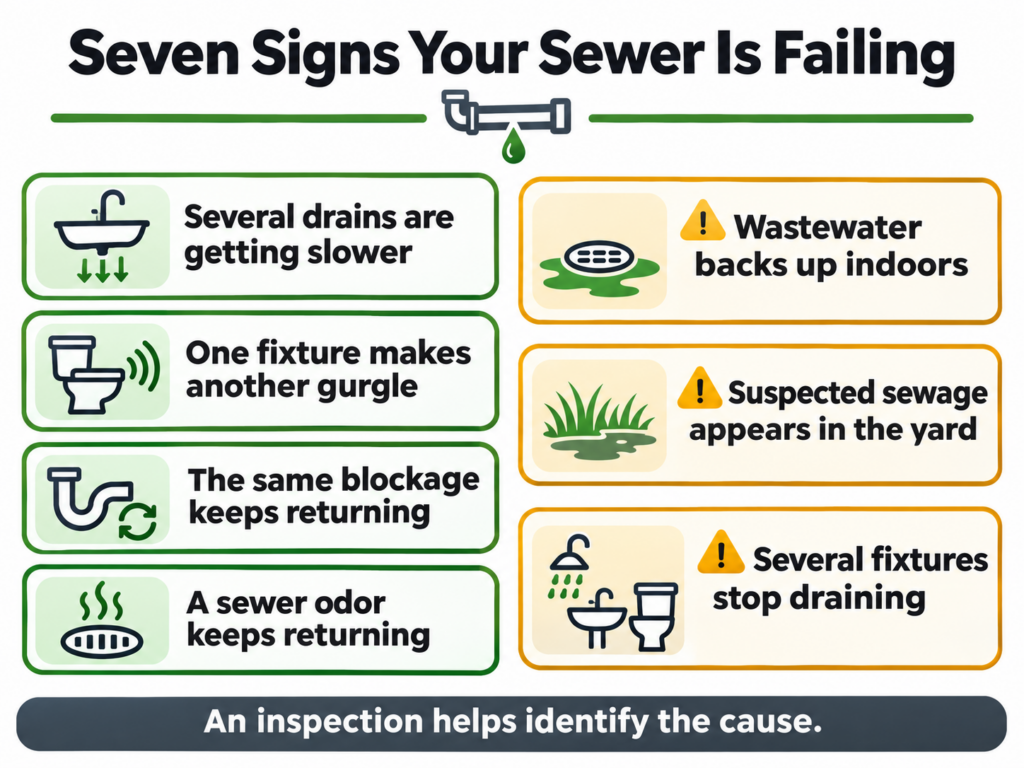
Several Drains Are Getting Slower
A bathroom sink that drains slowly might have hair or buildup near the fixture. When the shower, toilet, and another sink start struggling around the same time, the problem may be farther downstream.
Think about traffic merging onto one road. A blockage on a side street affects a small area. A restriction after several streets merge can slow everything feeding into it.
The same principle applies to your plumbing. Several affected fixtures can point to a restriction in a shared drain or the main sewer line.
What to notice: Is the trouble limited to one fixture, one bathroom, or different parts of the house? That distinction gives the person investigating the problem a useful starting point.
Schedule an evaluation if the pattern persists or worsens. You don’t need to wait for wastewater to come back up.
Using One Fixture Makes Another Gurgle
You flush the toilet and hear the tub drain answer. Or the washing machine empties and bubbles appear in a nearby toilet.
Those interactions are worth mentioning when you call. Gurgling can occur when air moves through water in the drainage system because of a restriction or a venting problem. It doesn’t automatically mean the buried sewer pipe has failed.
The more useful clue is whether the sound comes with other changes. A brief noise is different from repeated bubbling accompanied by slow drainage or rising water.
What to notice: Which appliance or fixture was running when the noise started? A description such as “the downstairs toilet bubbles when the washer drains” is more helpful than “the plumbing makes noise.”
If wastewater actually rises into another fixture, treat it as an urgent warning. See “Wastewater Comes Up Through a Drain or Toilet” below.
The Same Blockage Keeps Coming Back
The drain gets cleared. Everything works again. Then the same problem returns.
That cycle can mean the immediate obstruction was removed while the underlying cause remained. Roots, a displaced joint, damaged pipe, or a low section that collects waste may contribute to recurring trouble. What goes down the drain can also cause repeat blockages.
The next step is to find out why it keeps happening.
Ask what the cleaning removed, whether the line was inspected afterward, and whether there’s footage showing a defect. Keep previous service records so the next technician can see the history.
A useful question to ask: “What explains why this keeps returning, and what evidence supports that explanation?”
Cleaning may still be appropriate, but repeated service shouldn’t become a substitute for understanding the problem.
A Sewer Odor Keeps Returning
A sewer smell in a bathroom, basement, or yard deserves investigation, but it doesn’t identify the cause by itself.
Indoors, a dry trap in an infrequently used drain, a fixture seal, or a venting issue may be responsible. Outdoors, persistent odor near a wet area can raise concern about leaking wastewater.
Pay attention to where the odor is strongest and when it appears. Does it follow laundry use? Is it concentrated around a rarely used floor drain? Does it remain outside after the surrounding ground dries?
What to notice: Whether the smell is isolated or comes with slow drains, recurring clogs, or an unusually wet patch.
An odor alone isn’t a reason to approve sewer replacement. It is a reason to identify the source. If wastewater is visibly surfacing outdoors, arrange help promptly. See “Sewage or Suspected Wastewater Appears in the Yard” below.
Wastewater Comes Up Through a Drain or Toilet
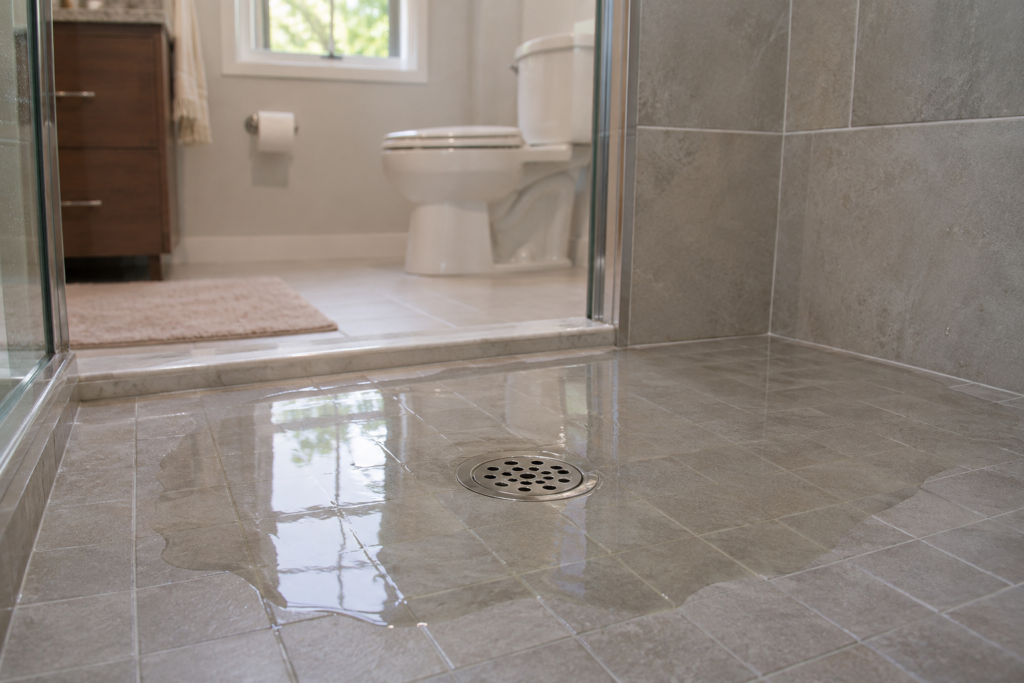
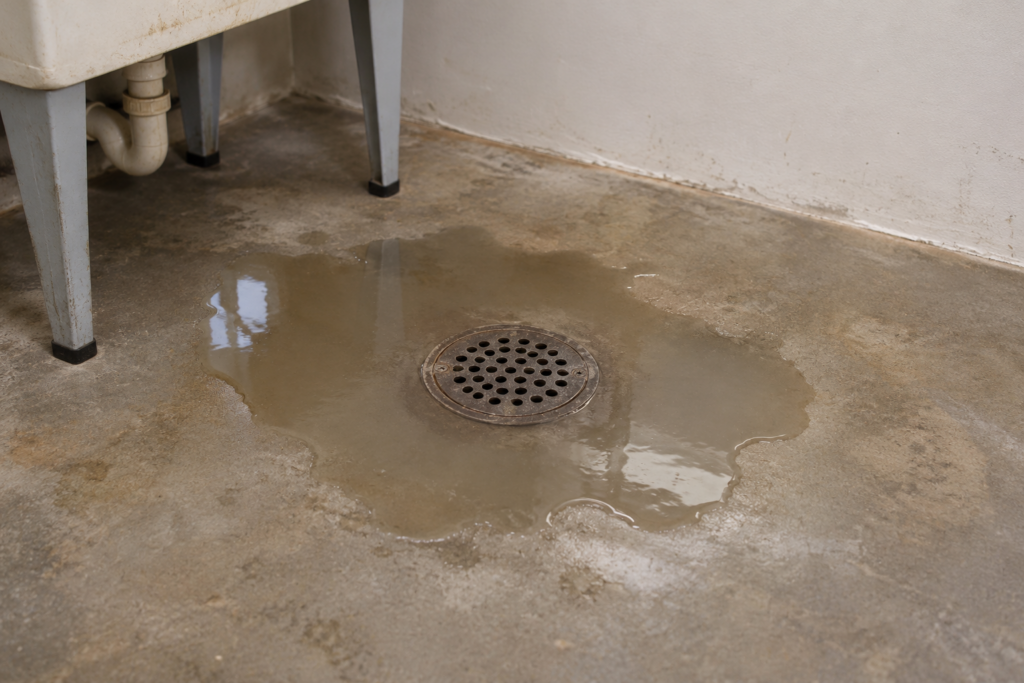
Water should leave through your drains. When wastewater comes back through a shower, floor drain, or toilet, the system needs prompt attention.
For example, the washer may discharge normally upstairs while dirty water appears in a basement drain. The visible backup shows where wastewater found an opening, not necessarily where the obstruction sits.
Stop using household plumbing while arranging help. Don’t keep flushing to see whether the problem has cleared. Keep children and pets away from the affected area.
The City of Portland recommends calling a plumber first to investigate a sewer backup. Professional cleanup may also be needed when sewage contaminates indoor surfaces or belongings.
What to report: Where the wastewater appeared, whether it’s still rising, and what was running when it started. Mention if it continues coming in even after household water use has stopped.
Sewage or Suspected Wastewater Appears in the Yard
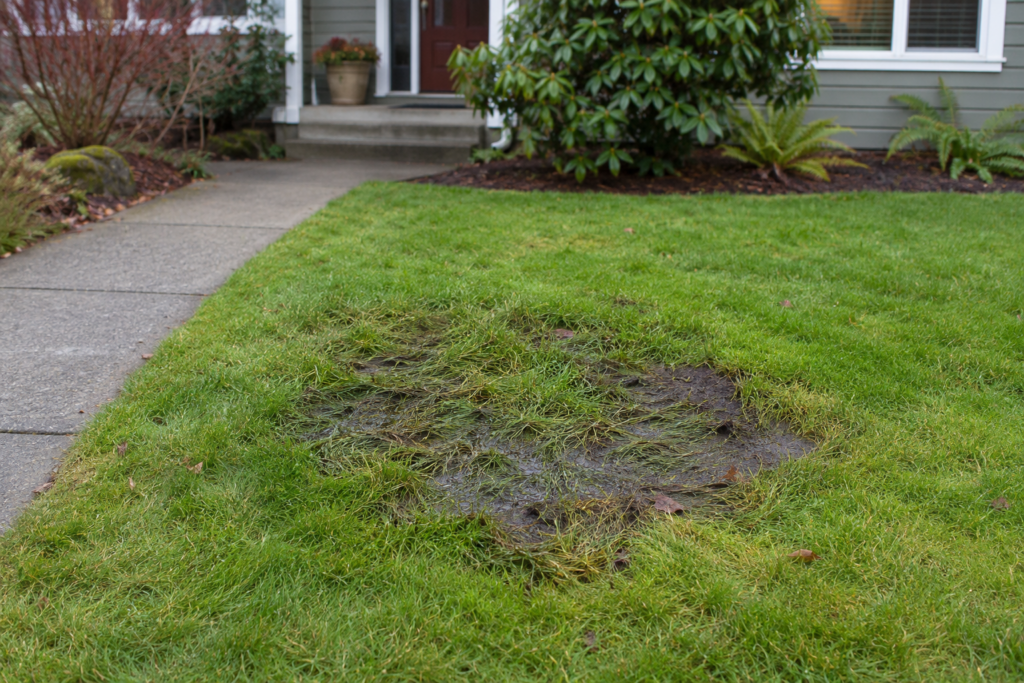
A soggy Portland lawn during a rainy week doesn’t prove a sewer leak. Irrigation, stormwater, and water supply leaks can also leave wet areas.
Concern increases when a patch smells like sewage, contains visible waste, or stays wet while the surrounding ground dries.
Don’t dig into the area to investigate or open a cleanout that may be holding backed-up wastewater. Keep people and pets away and arrange an assessment. If the ground is sinking or feels unstable, keep off it.
Portland asks residents to report sewage being released into the environment, as well as sewer backups in homes and businesses. Its sewer problem reporting page explains how to report the situation.
What to report: Where the wet area is, whether there’s an odor or visible waste, and whether you’ve also noticed drainage problems indoors.
Several Fixtures Suddenly Stop Draining
There’s a difference between a sink that empties slowly and a household that can no longer send wastewater out.
If multiple toilets and drains suddenly stop working, stop using the plumbing and arrange service. Continuing to run showers, laundry, or the dishwasher can add water to a system that has nowhere to send it.
This can happen with a major blockage. It doesn’t, by itself, prove the pipe has collapsed or that the entire sewer needs replacing.
What to report: Which fixtures have stopped draining, when it began, and whether any wastewater is already backing up.
If you can’t reach your regular contractor promptly, contact an available emergency plumbing or drain service. An active backup shouldn’t wait for a routine inspection appointment.
What Happens After You Make the Call?
The first priority during an active backup is addressing the immediate drainage problem. Once conditions allow, an inspection can help establish why it happened.
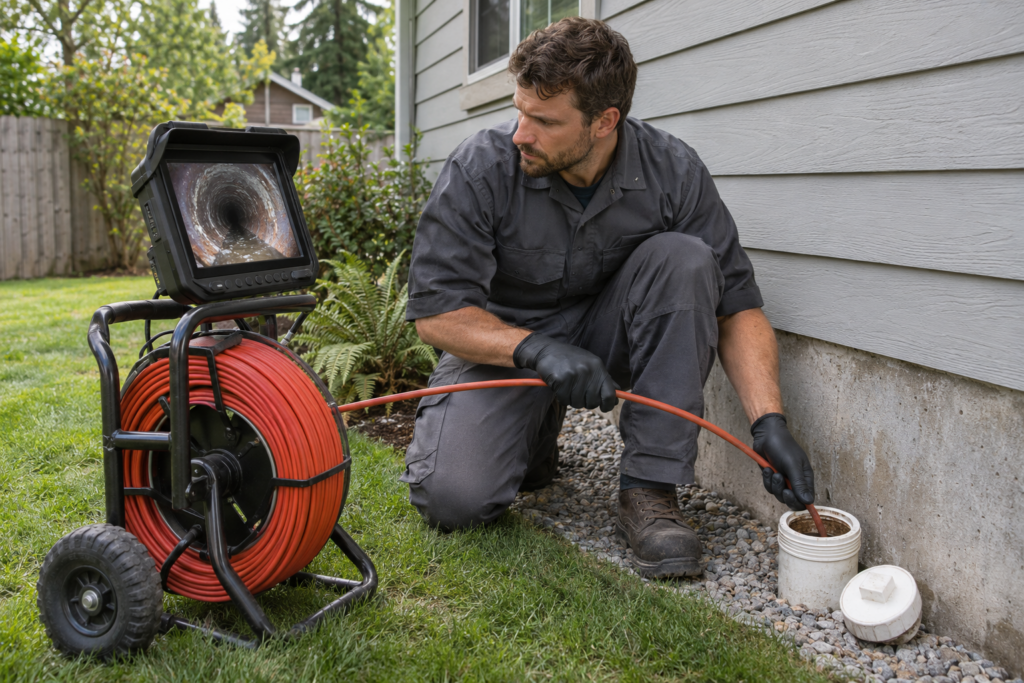
A sewer scope inspection can document visible conditions inside the accessible pipe. Heavy buildup or backed-up water may limit the view, so cleaning may be needed before useful footage can be collected.
Ask for a clear explanation of three things:
What was found? A blockage, roots, damaged pipe, or another condition?
Where is it? Can the affected section be located on the property?
What does it require? Cleaning, monitoring, a localized repair, or replacement?
Our guide to what a sewer scope shows explains how to understand the footage and its limitations.
Before calling, jot down what you’ve noticed and gather any previous inspection videos or cleaning invoices. Don’t run more water to recreate an active backup.
Does Sewer Trouble Mean Digging Up the Whole Yard?
The right response depends on the cause, the extent of the damage, and the property. Some problems can be addressed without replacing the entire line. When replacement is needed, residential pipe bursting may reduce excavation along suitable routes, though access pits and other digging can still be necessary.
Other conditions call for direct excavation. The contractor should explain why the proposed method fits the findings.
If you’re comparing options, our trenchless versus open trench cost guide explains what to include when comparing the complete job, including restoration.
Frequently Asked Questions
How can I tell whether I have a clogged drain or a sewer problem?
One affected fixture often points to a local issue. Problems involving several fixtures, especially when using one affects another, suggest a shared drain or sewer restriction. An inspection is needed to identify the cause.
Can a sewer line have problems even if the toilets still flush?
Yes. A partial restriction may allow some wastewater through while causing intermittent slow drainage or backups during heavier use. A working toilet doesn’t rule out a developing problem elsewhere in the line.
Does a recurring clog mean I need a new sewer line?
No. Recurring clogs warrant investigation, but replacement should be based on documented conditions. Ask what caused the blockage and why the recommended work addresses it.
Is a wet patch in the lawn a sign of a broken sewer?
It can be, but rain, irrigation, poor drainage, or a water supply leak can also explain wet ground. Sewage odor, visible waste, and related indoor drainage problems make prompt investigation more important.
Should I keep running water to see whether a backup clears?
No. Stop using household plumbing when wastewater is backing up or several fixtures have stopped draining. Additional water can worsen the overflow.
Can I wait until tomorrow if sewage is backing up?
Arrange help promptly. Stop using the plumbing and keep people and pets away from the affected area. If your usual contractor isn’t available, contact an emergency service that can respond.
Get Answers Before the Next Backup
You don’t have to know what’s wrong underground before making the call. Describe what you’re seeing, how often it happens, and whether the problem is getting worse.
Black Rock Underground can evaluate sewer concerns, explain inspection findings, and discuss repair or replacement options when needed. Call (503) 747-9312 or request a free evaluation. If sewage is actively backing up, seek immediate assistance rather than waiting for an online reply.